
Shopify Web Design That Turns Storefronts Into Revenue Engines
Custom Shopify web design, Shopify Plus builds, and theme customization engineered for conversion, not just visual polish.
Shopify web design is the process of designing and building a Shopify storefront, from theme and layout to product pages and checkout flow, around how buyers shop. A beautiful store that does not convert is a liability. We build the opposite, storefronts engineered for the buyer's path, from custom Liquid themes and Shopify Plus to headless Hydrogen, migrations, and ongoing CRO.


- Shopify, İkas, İdeasoft, and T-Soft partner
- 50+ B2B clients
- Istanbul, London, Dubai
A Shopify Web Design Agency Built Around Conversion, Not Just Aesthetics
A beautiful store that does not convert is a liability. We build the opposite. We build storefronts that look premium because they were engineered for the buyer's path, not the designer's portfolio.
Why Theme-Only Stores Stop Scaling After the First $100K
Premium Shopify themes are a great starting point. They stop being enough the moment your catalog, traffic mix, or merchandising needs outgrow them.
The pattern is consistent across the brands we audit:
- Product detail pages start collecting workaround apps that slow the site down.
- Collection pages lack the filtering and sorting that mid-funnel shoppers expect.
- Mobile conversion stagnates because the theme was designed desktop-first.
- Marketing teams wait on developers for every landing page change.
- Core Web Vitals decline as more apps inject scripts into every page load.
By the time a brand passes its first $100K month, the theme is fighting the business. A custom Shopify web design removes that friction.

How a Purpose-Built Shopify Storefront Compounds Brand Equity
A custom-designed Shopify store does three things a stock theme never will. It gives your brand a visual identity competitors cannot copy with a $300 theme license. It gives your operations team a CMS structure tuned to your actual catalog. And it gives your marketing team modular sections they can edit without a developer in the loop.
That compounds. Every campaign moves faster, every PDP launches sooner, every audit produces fewer findings. The site stops being a cost center and starts being leverage.

Our Full-Stack Shopify Web Design Services
We cover the full lifecycle of new store builds, migrations, redesigns, and ongoing CRO. Most engagements combine two or three of the services below.
Custom Shopify Theme Design From Scratch
For brands that need a storefront no competitor can mimic, we build custom Shopify themes from the ground up on the Dawn architecture. You get a Liquid-native theme, modular sections, JSON templates on every page type, and a documented design system.
- Bespoke visual design in Figma with a complete component library
- Custom-coded Liquid theme on Online Store 2.0 architecture
- Every page template, including home, collection, PDP, cart, search, blog, and account
- Speed budget enforced from the first commit, not patched after launch
- Documentation handover so your team can extend without us
Online Store 2.0 Theme Customization on Dawn, Sense and Craft
If a full custom build is overkill, we customize Online Store 2.0 themes such as Dawn, Sense, Craft, or premium themes into something that feels custom without the custom timeline.
This route fits brands that:
- Need to launch within 4 to 6 weeks
- Have validated their product but not their final brand identity
- Want a foundation they can extend later
Shopify Plus Web Design for Enterprise and High-Volume Brands
For brands on Shopify Plus, web design is just one piece of a larger build that includes checkout extensibility, B2B catalog logic, multi-storefront expansion, and Shopify Functions.
- Custom storefront design across consumer and B2B surfaces
- Checkout extensibility using Shopify's native APIs
- Markets setup for multi-region and multi-currency
- Shopify Functions for discounting, shipping, and payment customization
- Performance tuning to keep Lighthouse scores above 90 at enterprise catalog sizes
Headless Shopify and Hydrogen Storefronts
Sometimes a brand needs a storefront experience the Liquid layer cannot deliver, such as sub-second page transitions, rich CMS-driven storytelling, or a non-standard buying flow. In those cases we build headless. We use Hydrogen and Oxygen on the Shopify side, with Sanity, Contentful, or Storyblok handling editorial content.
Headless is the right answer for maybe 10% of brands. We will tell you honestly when it is not.
Store Migration to Shopify From WooCommerce, Magento, İdeasoft and İkas
We migrate stores onto Shopify without losing SEO rankings, customer data, or order history. Our migration framework handles product variants, metafields, customer accounts, historical orders, redirects, and structured data.
- Zero downtime on launch day
- 301 redirects mapped for every legacy URL
- Schema markup re-implemented on the new theme
- Customer accounts ported with order history intact
- Re-validation of every critical funnel before go-live
Shopify CRO and UX Redesign for Existing Stores
If you already have a Shopify store and the design is not working, you do not need a full rebuild. You need a structured CRO and UX redesign program.
We audit your store using behavior analytics, session recordings, and funnel data. Then we redesign the highest-leverage surfaces, usually PDP, cart, and collection pages, and run sequenced A/B tests against the live theme.
A Conversion-First Design System for Every Storefront
Every store we ship is built on a documented design system. This is what separates a Shopify web design that holds up at scale from one that breaks the moment your marketing team needs a new landing page.
Mobile-First Product Detail Pages Engineered for Add-to-Cart
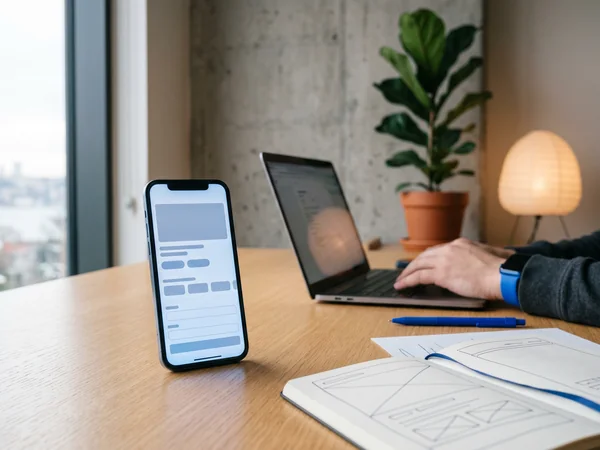
PDP design is where most Shopify stores leak revenue. We redesign the PDP as a conversion surface, not a product encyclopedia.
What we systematically optimize:
- Above-the-fold hierarchy that fits one mobile viewport
- Variant pickers that handle 50+ SKU products without confusion
- Add-to-cart that is visible at every scroll depth
- Trust signals such as returns, shipping, and reviews placed where buyers actually pause
- Cross-sell and upsell modules that lift AOV without bloating the page
Collection Pages With Faceted Filtering and Merchandising Logic
Collection pages are the second-largest source of conversion leakage. We design them as filtering experiences, not catalog walls.
This means real faceted filtering on Shopify with proper URL parameters for SEO, curated sort orders, merchandising rules that surface best-sellers, and quick-view interactions that let shoppers compare without leaving the grid.
One-Page Checkout, Shop Pay and Cart Drawer Optimization
Cart and checkout are where intent peaks. The design has one job, which is to stay out of the way.
We optimize the cart drawer for upsell without distraction, configure Shop Pay and one-page checkout properly, and on Shopify Plus we extend checkout with custom validation, gift options, and post-purchase upsells.

Core Web Vitals, Speed and Lighthouse Scores Above 90
Speed is a design constraint, not a post-launch fix. Every theme we ship enforces a budget on JavaScript weight, image weight, and third-party scripts. Lazy loading, responsive image sets, font preloading, and section-level code-splitting are part of the architecture, not patches.
On mobile, at launch, not after a six-month optimization sprint.
Largest Contentful Paint under 2.5 seconds on a real mobile connection.
Cumulative Layout Shift under 0.1 on every template, every breakpoint.
Built on Liquid, Sections, Metafields and Metaobjects
We build on Shopify's native primitives. No black-box page builders that hold your content hostage. No bloated app stacks that turn updates into rescue operations.

Modular Sections Your Marketing Team Can Edit Without a Developer
Every storefront we deliver comes with a library of custom sections. Hero variants, feature blocks, testimonial layouts, comparison tables, lookbook strips, and FAQ accordions are all editable from the Shopify theme editor with structured settings.
Your team can launch a new collection landing page in an afternoon instead of opening a ticket.
Metaobjects for Structured PDP Content, Lookbooks and Story Pages
Metaobjects are the most underused feature in Online Store 2.0. We use them aggressively. Story pages, lookbooks, ingredient libraries, size guides, technical specifications, and brand ambassador profiles are all modeled as metaobjects, all reusable across templates, all editable by non-technical staff.
Schema Markup, Hreflang and Technical SEO Baked Into the Theme
SEO is built into the theme at the structural level. Every PDP outputs valid Product schema with offer, brand, and review nodes. Every collection outputs ItemList. Article and Organization schema are wired into the global layout. Hreflang tags are generated automatically from Shopify Markets.
Ready to See What Your Storefront Could Be Doing?
Book a 30-minute discovery call. We will review your current Shopify store live and tell you honestly where the revenue is leaking.
Our Shopify Web Design Process
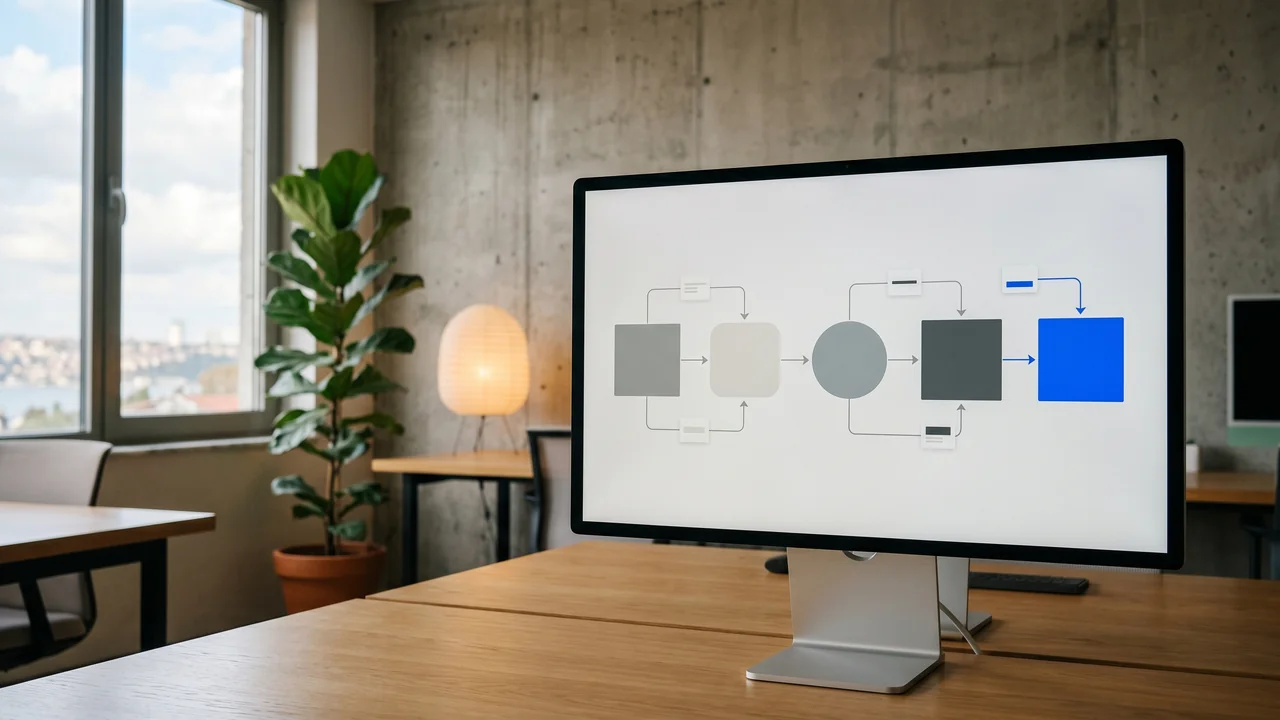
A predictable process is how we ship complex projects without surprises. Five phases, clear deliverables, no scope drift.
Discovery, Audit and Conversion Diagnostic
A two-week paid sprint that produces a written diagnostic of where your current storefront leaks revenue, plus scope, timeline, and budget.
Information Architecture and Wireframing in Figma
Every template, every state, and every breakpoint is wireframed before a single pixel of visual design is touched.
Visual Design, Component Library and Design Tokens
A complete Figma component library backed by design tokens for color, type, spacing, and motion. No translation gap between design and code.
Liquid Development, QA and Cross-Device Testing
Development on a Shopify development store with version control and Shopify CLI. QA across every breakpoint, variant flow, and checkout edge case.
Launch, Analytics Setup and Post-Launch Optimization
GA4, GTM with Consent Mode v2, Meta Pixel, server-side tracking where applicable. A 30-day post-launch optimization sprint based on real user data.
Apps, Integrations and Custom Functionality
Most Shopify stores fail because of bad app stacks, not bad themes. We treat app selection as a design decision.
ERP, PIM and Inventory Integrations via Shopify API
For brands with serious operational complexity, such as multiple warehouses, B2B price lists, or syndicated catalogs, we integrate Shopify with the systems that already run the business. SAP, Netsuite, Logo, Mikro, and custom ERPs all qualify. We use the Shopify Admin API, GraphQL, and webhooks where needed, and we own the integration end-to-end.
Klaviyo, Judge.me, Recharge and Loyalty Apps
The right apps, properly configured, beat a fat custom build. We are opinionated about which apps to use and we configure them as if they were native theme features:
- Klaviyo for email and SMS with deep theme integration
- Judge.me or Loox for reviews wired into PDP and PLP
- Recharge or Skio for subscription commerce
- Smile.io or LoyaltyLion for retention programs
- Searchanise or Algolia for serious search
Custom App Development When the App Store Falls Short
When no app does what the business actually needs, we build one. Custom Shopify apps using Remix, Polaris, and Shopify's app framework. Embedded apps for the admin, public apps where it makes sense, all built to Shopify's submission standards.

Outcomes a Properly Designed Shopify Store Delivers
Web design is not a creative exercise. It is a financial decision. These are the outcomes our clients consistently see.
Higher Conversion Rates Across Mobile and Desktop
A well-designed storefront typically lifts site-wide conversion rate by 15 to 40% within the first 90 days post-launch. The biggest gains usually come from PDP and mobile cart.
Lower CAC From Cleaner Funnels and Faster Pages
Faster pages and clearer funnels mean lower bounce, higher add-to-cart, and better ad efficiency. Paid traffic that used to bounce now converts. Effective CAC drops without ad budget changes.
Operational Efficiency for Marketing and Merchandising Teams
A documented design system and modular sections mean your team ships campaigns faster. New landing pages in hours instead of weeks. New PDP layouts without a developer ticket.
Stronger Brand Equity Competitors Cannot Copy
A custom storefront gives your brand a visual identity no $300 theme license can replicate. The compounding effect on brand perception and repeat purchase is real and measurable.
Industries and Brand Stages We Design Shopify Stores For
We focus on growth-stage and enterprise commerce, working with brands that have outgrown their original theme and need a storefront engineered for the next stage.
Direct-to-Consumer Brands Scaling Past Theme Limitations
DTC brands doing $1M to $20M annually that have outgrown their original theme. The build pays for itself within one to two quarters from conversion lift alone.
Multi-Brand and Multi-Storefront Operations on Shopify Plus
Brand groups operating multiple storefronts on Shopify Plus, across categories, regions, or B2C versus B2B. We architect a shared design system and component library across all of them.
B2B and Wholesale Storefronts With Tiered Pricing
B2B Shopify storefronts with company accounts, tiered pricing, custom catalogs, and PO checkout. We design the buying experience for procurement, not for retail.
Why Brands Choose Benji's Digital as Their Shopify Web Design Partner
We do not hand off a Figma file and walk away. We design, build, launch, measure, and iterate with the same team across the full lifecycle.
Partner Status and Multi-Platform E-Commerce Expertise
We are an official Shopify, İkas, İdeasoft, and T-Soft partner. We also work daily across WooCommerce, which gives us a perspective most Shopify-only agencies do not have. We know exactly what features brands give up when they migrate, and exactly how to rebuild those features natively on Shopify. For teams weighing platforms before a build, our Shopify agency services and Shopify theme development work go deeper on each track. And once your store is live, our Shopify CRO program keeps turning that design into measurable revenue.
Istanbul-Based Studio Serving Brands Across Europe and the Gulf
Our studio is in Beyoğlu, Istanbul. Our clients are in Istanbul, London, Dubai, Berlin, and Los Angeles. Our team works across English and Turkish, and we are comfortable on cross-border projects that need timezone overlap with both Europe and North America.
A Performance-First Team That Owns Outcomes, Not Just Mockups
The same team that designed your storefront is on the call when conversion data comes in six weeks later. We do not hand off and disappear.

Beyond Shopify Storefronts
Shopify is one of the platforms we design on, but the principles behind a high-converting storefront apply far beyond it.
If your project is not tied to Shopify, our broader web design service covers custom sites on any stack. And if you are weighing platforms for a new store, our eCommerce web design service approaches the same conversion problem across every major commerce platform.
Frequently Asked Questions About Shopify Web Design
Honest answers to the questions brands actually ask us before kicking off a Shopify web design engagement.
What is included in a Shopify web design service?
A Shopify web design service typically includes UX strategy, visual design, custom theme development on Liquid, page templates for home, collection, product, cart, and checkout, mobile optimization, technical SEO setup, analytics configuration, and post-launch support. At Benji's Digital, we also include a documented design system, modular sections your team can edit, and a 30-day post-launch optimization sprint based on real user data.
How much does a custom Shopify website cost?
A custom Shopify web design from an experienced agency typically ranges from $5,000 to $20,000 for standard projects, and $25,000 to $100,000+ for Shopify Plus or complex enterprise builds. The final price depends on catalog size, number of custom page templates, third-party integrations, and whether you need a full custom theme or a heavily customized Online Store 2.0 theme. We provide a fixed-scope, fixed-price proposal after a paid discovery sprint, so there are no surprises mid-project.
How long does it take to design and build a Shopify store?
Timelines range from 4 to 6 weeks for a heavily customized Online Store 2.0 theme, 8 to 12 weeks for a full custom Shopify build, and 12 to 20 weeks for Shopify Plus or headless projects. Timeline depends on scope, content readiness on your side, and the number of integrations. We give you a phased delivery schedule on day one and ship on it.
What is the difference between Shopify theme customization and a custom Shopify theme?
Theme customization starts with an existing Online Store 2.0 theme like Dawn, Sense, or Craft and modifies its design, sections, and components. It is faster and cheaper, usually 4 to 6 weeks. A custom Shopify theme is built from scratch in Liquid with bespoke design, custom sections, JSON templates, and a unique component library. It is slower and more expensive, but it carries no theme constraints. Most brands under $5M revenue start with customization, and brands above that usually need a custom theme.
Do I need Shopify Plus for a custom web design?
No. Custom Shopify web design works on every Shopify plan, including Basic, Shopify, and Advanced. You only need Shopify Plus if you require checkout extensibility, B2B catalogs with company accounts, Shopify Functions, multiple storefronts under one organization, or are doing serious enterprise volume, generally $3M+ annual revenue.
Can you migrate my existing store from WooCommerce, Magento, İdeasoft or İkas to Shopify?
Yes. We handle full Shopify migrations from WooCommerce, Magento, BigCommerce, İdeasoft, İkas, T-Soft, and Ticimax. The migration covers product data, variants, customer accounts, order history, blog content, 301 redirects for every legacy URL, schema markup re-implementation, and re-validation of every conversion funnel. SEO rankings are preserved when the migration is executed correctly.
Will my Shopify SEO rankings stay safe after a redesign?
Yes, when the redesign is handled correctly. We preserve your URL structure where possible, set up 301 redirects for every URL that does change, re-implement Product, Collection, Organization, and Article schema markup, maintain hreflang for multi-region stores, and keep your existing meta titles and descriptions unless we are intentionally improving them. Most clients see flat or improved rankings within 30 days of relaunch.
Will my Shopify store be mobile-optimized?
Yes. Every storefront we design is mobile-first, meaning we design the mobile experience before the desktop layout. Over 70% of Shopify traffic is mobile, and most conversion leakage happens on mobile. We optimize the PDP, cart drawer, and checkout specifically for one-handed use and we test on real devices, not just browser emulators.
What apps do you typically install on a Shopify store?
We install only the apps that earn their place in performance and operations. A typical stack includes Klaviyo for email and SMS, Judge.me or Loox for reviews, Searchanise or Algolia for search, Recharge or Skio for subscriptions, and Smile.io or LoyaltyLion for loyalty. We avoid heavy page builder apps that bloat the theme and slow the site down.
Can my marketing team update the Shopify store without a developer?
Yes. Every theme we ship comes with a library of modular sections, including hero variants, feature blocks, testimonial layouts, comparison tables, lookbook strips, and FAQ accordions, all editable from the Shopify theme editor with structured settings. We also use metaobjects for reusable structured content like size guides, lookbooks, and brand pages. Most clients launch new landing pages in hours.
Do you offer post-launch support and ongoing optimization?
Yes. Every build includes a 30-day post-launch support window covering bug fixes, optimization based on live user data, and any small adjustments needed after launch. After that, most clients move to a monthly retainer covering CRO, A/B testing, new section development, performance monitoring, and ongoing strategic support.
Are you an official Shopify Partner?
Yes. Benji's Digital is an official Shopify, İkas, İdeasoft, and T-Soft partner, which means we have direct access to each platform's partner resources, technical documentation, and support channels. That status is especially useful when migrating clients onto Shopify from those platforms.
Do you work with brands outside Turkey?
Yes. Our studio is in Beyoğlu, Istanbul, but most of our Shopify clients are international, based in London, Dubai, Berlin, and across the EU and Gulf. We work fluently in English and Turkish, and our timezone (GMT+3) gives us same-day overlap with both Europe and North America.
What is the first step to start a Shopify web design project?
The first step is a 30-minute discovery call where we review your current store live, ask about your goals, and outline what a Shopify web design engagement would look like for your business. If we are a fit, we move into a paid discovery sprint that produces a written diagnostic, scope, timeline, and fixed-price proposal before any design work begins.
Book a Shopify Web Design Discovery Call
If your Shopify store is leaking revenue, fighting your marketing team, or just stopped looking like a premium brand, let us look at it. 30 minutes, a live store review, an honest diagnostic. No pitch deck. No commitment.
- Email hello@benjisdigital.com
- Phone +90 532 154 11 20
- WhatsApp +90 532 154 11 20
Shopify Web Design Discovery Call
Tell us about your store and goals, and we'll get back to you to schedule a live store review and an honest diagnostic of where the revenue is leaking.
We reply to your form as soon as possible.