
Shopify SEO Services That Lead Your Store in Organic Search
Platform-specific Shopify SEO that optimizes your Liquid theme, collection architecture, and Core Web Vitals under one roof, built ready for AI search.
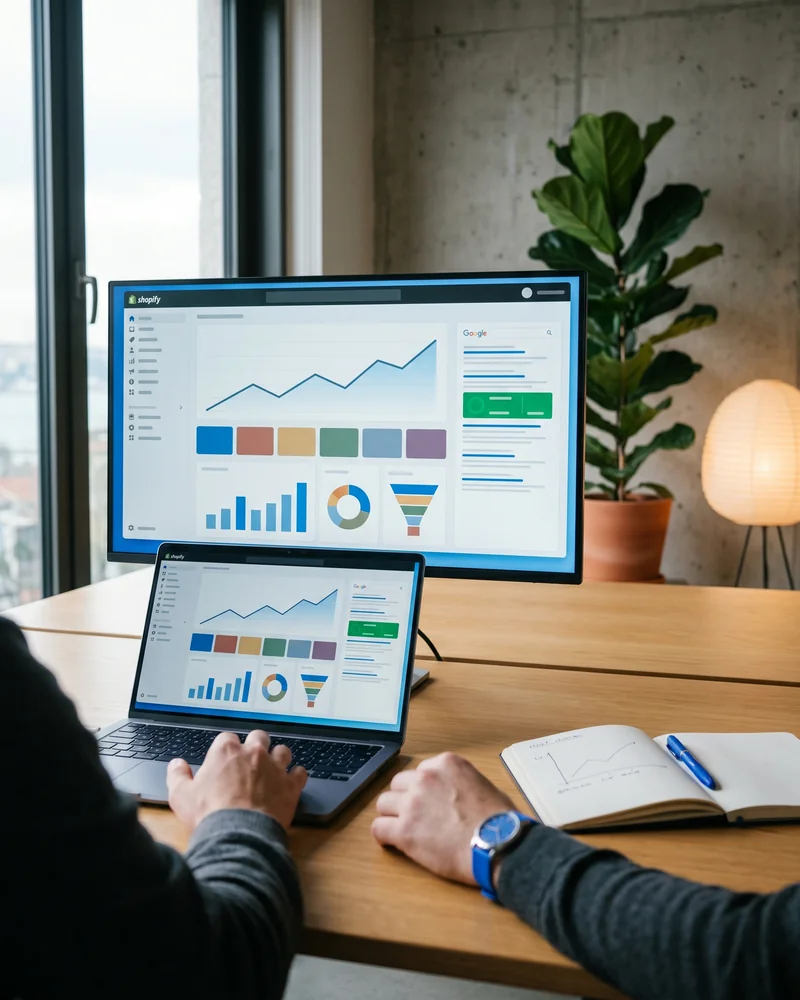
Shopify SEO services improve a store's organic search visibility by optimizing its Liquid theme, collection architecture, product pages, and Core Web Vitals. Benji's Digital is an official Shopify, İkas, İdeasoft, and T-Soft partner agency based in Istanbul, running Shopify SEO programs for DTC and Shopify Plus brands across Türkiye, the EU, and the US. Our team knows the platform's technical limits and speaks Liquid and store architecture fluently. We don't just make your store more visible. We build a measurable organic channel.

- Official Shopify, İkas, İdeasoft, and T-Soft partner
- Shopify Plus experience
- GEO and AI search built in
Why Shopify SEO Is Different From Standard SEO
Shopify is a closed-architecture ecommerce platform. That brings real advantages, fast setup and secure checkout among them, but it gives you less room to maneuver on URL structure, the render layer, and theme flexibility than WordPress or a custom build. A generalist SEO agency tends to discover those constraints after a mistake ships, not during the analysis.
Shopify SEO is the practice of growing organic search visibility for a Shopify store by working within the platform's specific mechanics, including Liquid theme rendering, the /collections/ and /products/ URL structure, canonical control, app-stack performance, and structured data. It is a distinct discipline, not generic SEO applied to a different logo.
Three factors make Shopify SEO its own specialty, and each one is where most stores quietly lose rankings.
Three things that make Shopify SEO platform-specific
- The theme layer runs on the Liquid template language, so technical work requires real platform knowledge
- The dual /products/ and /collections/ URL structure creates canonical and duplicate-content risk
- The app ecosystem directly affects page speed and Core Web Vitals
- Faceted navigation and filter parameters spawn near-duplicate URLs that leak authority
- Variant URLs index the same product under multiple paths without careful canonical rules
The Technical Realities Behind Shopify SEO
Shopify rewards stores that respect its structure and penalizes stores that fight it. These are the three areas where platform knowledge separates a real result from a wasted retainer.
Liquid Theme Structure and Platform Limits
Liquid is the template language Shopify themes run on. Heading hierarchy, schema, image delivery, and internal linking all live in Liquid, so a wrong edit costs both performance and visibility. We align theme edits to SEO and conversion at the template level, so optimization is preserved automatically as you add new products and categories.
URL Logic, Canonical, and Duplicate Content Risk
Shopify lets shoppers reach a product through both /products/product-name and /collections/collection/products/product-name. Without correct canonical management, the same product indexes under several URLs and leaks authority. Filter and tag parameters compound the problem. We define preferred URLs, close off needless parameter paths, and bring faceted navigation under control with indexing rules.
App-Stack Impact on Speed and Core Web Vitals
The two things that hurt Shopify organic performance most are excess app load and ghost code left behind by uninstalled apps. Every app adds scripts, styles, and server-side work, and stacked or unused apps drag down LCP, INP, and CLS directly. We audit your app stack, keep what earns its place, and strip the leftover JavaScript and third-party scripts so the store runs lighter for users and for Google.
What Shopify SEO Services Include
Seven service components planned together, not as disconnected one-off tasks. Technical, content, and authority layers run inside the same sprint.
Technical SEO Audit and Liquid Store Optimization
Every engagement starts with a full technical audit. We benchmark your Core Web Vitals, map indexing status, and surface the canonical, duplicate-content, and schema issues holding the store back. Then we prioritize the findings and apply theme-level fixes directly in Liquid.
- Site speed and Core Web Vitals baseline (LCP, INP, CLS)
- Indexing status, robots.txt, and sitemap.xml behavior
- Canonical tags, filter URLs, and duplicate-content risks
- Structured data gaps and schema errors
- Mobile usability and template-level inconsistencies

Collection Page Architecture and Faceted Navigation Control
Collection pages are the main organic entry point for an ecommerce store. We move them past the product-grid-plus-a-sentence pattern and turn them into pages that build thematic authority.
That means original top and bottom description blocks on every collection, filter and tag URL variations consolidated with canonical, breadcrumbs built consistently for users and crawlers, and a stronger internal-link structure through subcategory links.
Product Page SEO for Titles, Descriptions, Variants, and Schema
Product pages are where the buying decision happens. We optimize search performance and conversion on the same page, at the same time.
Work covers meta titles built on a brand, model, product-type, and distinguishing-feature formula, original benefit-led descriptions that differ from supplier copy, short keyword-focused variant and URL handles, WebP images with meaningful alt text, and on-page FAQ blocks that answer pre-purchase questions.
JSON-LD Structured Data and Rich Snippets
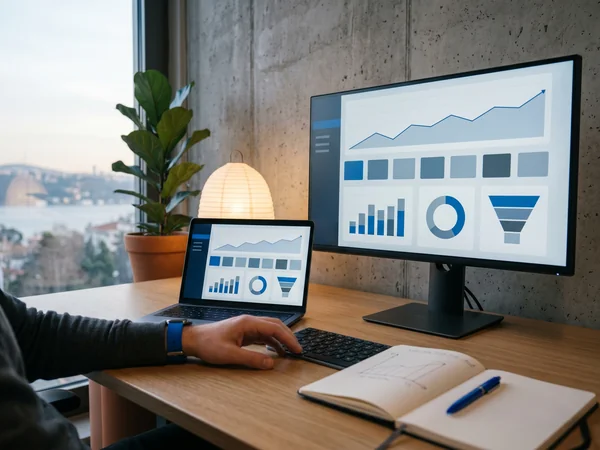
Structured data is what gets your product and collection pages shown as rich snippets in search. Star ratings, price, and stock status in the SERP raise click-through rates noticeably. We implement Product, Offer, and AggregateRating on product pages, CollectionPage and OfferCatalog on collections, BreadcrumbList everywhere, Article and Author on blog posts, and FAQPage on FAQ blocks. We validate every schema with the Google Rich Results Test.
Core Web Vitals Optimization for LCP, INP, and CLS
Core Web Vitals is an official ranking signal. Our targets are LCP under 2.5 seconds, INP under 200 milliseconds, and CLS under 0.1. We convert images to WebP and optimize their size, apply lazy loading and fetchpriority, extract critical CSS and defer the rest, clean up theme code, and re-evaluate the app stack on a performance basis.
Content Strategy, Blog Architecture, and Topical Authority
SEO is not a technical discipline alone. Content architecture decides as much as code does. We map your target keyword universe, build internal-link bridges between blog posts and the related collection and product pages, plan a content calendar for pre-decision and decision-stage queries, and produce guides and comparison pages that feed your products.
Off-Site SEO and Authority Link Building
Off-site work decides long-term rankings. Rather than chase hundreds of low-quality links, we focus on a smaller set of genuinely relevant, authority-carrying placements. That covers industry media and blog placements, digital PR built on newsworthy data, brand-mention monitoring that converts unlinked mentions into links, and spam-profile cleanup with disavow management.

GEO and AI Search Optimization for Your Shopify Store
Search behavior is changing. A large share of shoppers now look for answers in ChatGPT, Perplexity, and Google AI Overviews before they ever scroll a list of blue links. GEO (Generative Engine Optimization) is the optimization discipline that gets your store cited accurately and often inside AI-generated answers.
At Benji's Digital we treat GEO as the natural extension of classic SEO rather than a separate channel. That is our core difference from most Shopify SEO agencies, and it is built into every engagement instead of sold as an upgrade.
Entity SEO and Semantic Content Structure
AI models read content as entities and relationships, not word by word. We clarify your brand, product, category, and service entities and present the relationships between them to the model through schema, internal links, and content structure. Definition boxes, comparison blocks, and step-by-step guides give AI engines formats they can quote directly.
AI-Ready FAQs on Product and Collection Pages
FAQ blocks on product and collection pages help you stand out in the SERP and get cited as a source in AI answers. We choose questions shoppers actually ask, the ones that influence a purchase, and write 40 to 60 word extractable answers that maximize the chance of a citation in Google's People Also Ask blocks and in AI responses.
Keyword Strategy and Search Intent Matching
Our keyword strategy prioritizes terms that carry buying intent for your store, not just high-volume terms. We handle each intent class separately by page type.
Transactional and Long-Tail Keywords for Product Pages
Product pages target transactional terms like buy, price, and order online, plus long-tail variations. Instead of a broad head term, we go after low-competition, high-conversion phrases such as a specific shockproof clear case for a named phone model.
High-Volume Category Queries for Collection Pages
Collection pages are your traffic magnets. Alongside main category terms, we build subcategories such as men's running shoes and men's casual sneakers, spreading authority across the base of the catalog.
Informational and Pre-Decision Queries for the Blog
The blog layer pulls in shoppers whose buying intent has not formed yet. Comparison, guide, and how-to-choose content starts nurturing them, and internal links route them toward the product pages.
The Shopify SEO Process From Audit to Measurable Results
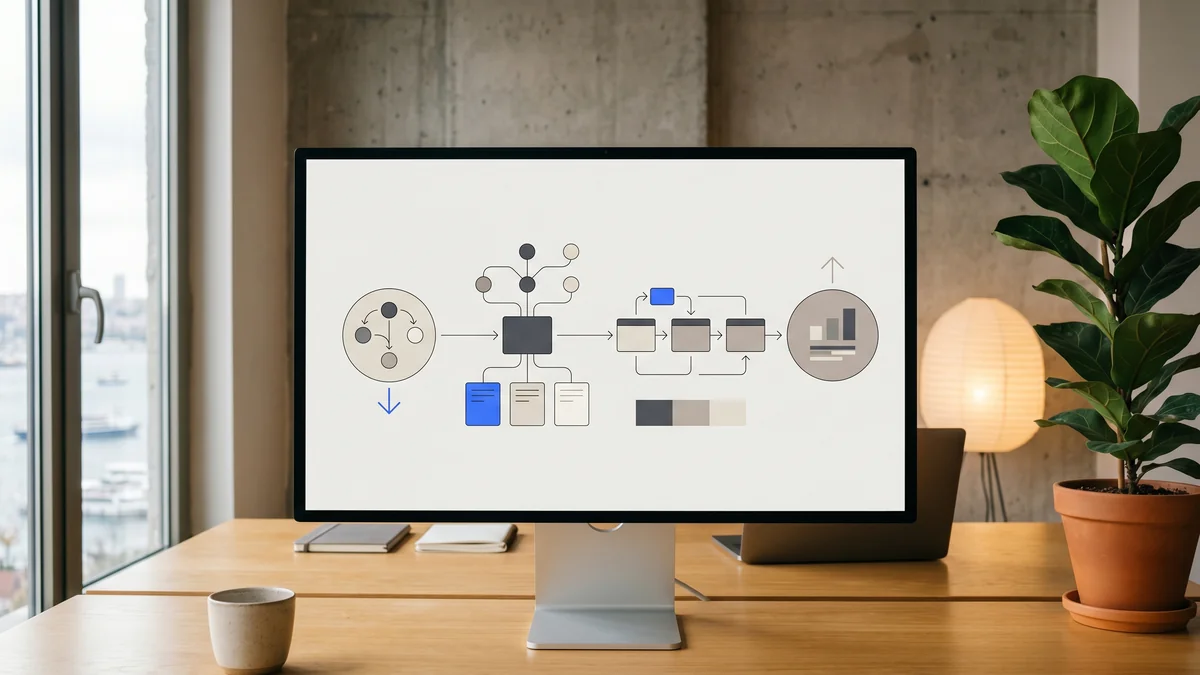
The process runs in four stages. At the start of each one we make clear what we'll do, when we'll finish, and which metric we'll measure it by.
Technical Audit and Performance Baseline
In the first 1 to 2 weeks we complete the technical audit, content audit, and competitor analysis. We record current Core Web Vitals scores, indexed page count, average rankings, and the organic traffic baseline. That baseline is the reference we measure all later progress against.
Weeks 1 to 2Strategy, Keyword Map, and Page Prioritization
Next we build a strategy document from the audit findings and the keyword map. It defines which pages we touch each month, which content we produce, and which theme edits we make, so there is no ambiguity about the plan.
Week 3Template, Content, and Schema Sprints
Implementation runs in two-week sprints. Each sprint pairs a technical task with content production and a schema improvement, so your store shows measurable progress at the end of every cycle.
Per sprintMonthly Reporting, Traffic, and Core Web Vitals Tracking
At the end of each month you get a detailed report. It compares organic traffic, keyword rankings, conversion data, and Core Web Vitals scores against the baseline, and shows transparently which work produced which result.
OngoingStop Guessing Where Your Organic Traffic Leaks. Start Measuring It.
A free Shopify SEO pre-analysis will show you exactly where your store is losing rankings and what to fix first.
Results to Expect From a Shopify SEO Service
SEO is not an instant channel. On a new store, the first meaningful organic movement usually shows within 3 to 6 months, and durable rankings settle in over 6 to 12 months. A correctly built SEO program produces a gain that compounds over time.
Sustainable organic growth means traffic that does not depend on ad budget. Even if work pauses, the rankings you earned are largely retained, which is the structural advantage SEO holds over paid channels.
Results vary by store size, traffic quality, and starting baseline. We don't promise specific numbers in a sales call. We promise a structured program that compounds, measured against your baseline every month.
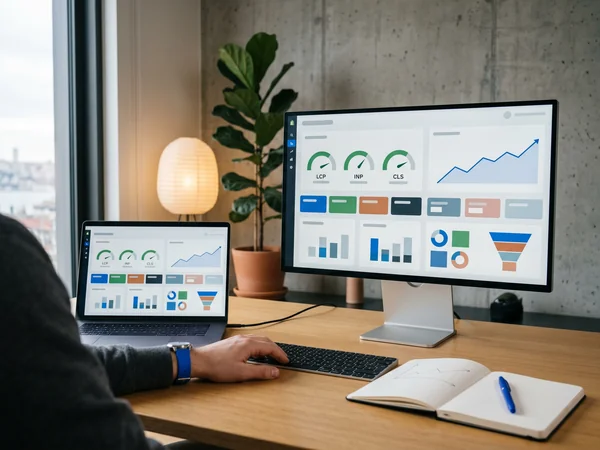
Sustainable Growth in Organic Traffic
The goal in the first 6 months is a clear, sustainable lift in organic traffic. It does not depend on ad spend, and the rankings you win are largely held even if the work is paused.
Conversion-Focused Product and Collection Pages
SEO does not only bring traffic. It improves the quality of the traffic it brings. With correct keyword matching and on-page CRO work, your conversion rate rises on the same traffic.
Less Dependence on Advertising Costs
Ads are scalable but costly. As the organic channel strengthens, your Meta Ads and Google Ads budgets work harder, your acquisition cost falls, and your revenue mix becomes multi-channel.
Which Shopify Stores This Service Is Right For
Our Shopify SEO service is planned to fit stores of every size, but it produces the highest value for three profiles in particular.
New Shopify and Shopify Plus Stores
On a new store, getting the SEO foundations right from day one delivers far more efficient growth later. Theme choice, collection architecture, and schema setup are planned before the site even goes live.
Established Ecommerce Brands Losing Traffic
The most common scenario on established stores is organic traffic falling after an algorithm update or a theme change. We diagnose the root cause of the drop and recover your rankings with a corrective SEO program.
DTC Brands Expanding Into International Markets
For DTC brands going global, we run multilingual SEO, hreflang configuration, and market-by-market content planning. Shopify Markets features are configured with SEO at the center.
What to Look For in a Shopify SEO Agency
Benji's Digital is an official Shopify, İkas, İdeasoft, and T-Soft partner agency. Partner status is not just a badge. It means direct access to constantly updated Shopify documentation, Liquid changes, and platform APIs. With multiple Shopify projects in our portfolio, we solve platform-specific challenges at the strategy stage instead of after they break something.
Most agencies either ignore GEO or treat it as a surface-level trend. We built GEO in as a core discipline from day one, so every stage of our Shopify SEO work targets classic organic search and AI-based search together rather than one at the expense of the other.
Our Beyoğlu, Istanbul team runs Turkish and English projects to the same quality standard. We know local search behavior in the Türkiye market and give global SEO support to brands scaling internationally, working in Turkish, English, and the technical languages of Liquid, JSON-LD, and Shopify Plus.

How Shopify SEO Fits Your Wider Growth Program
Organic search is one channel inside a larger commerce strategy. Shopify SEO earns rankings, but it works hardest when it sits next to the rest of your store program.
For full-service store work across design, build, and growth, see our Shopify agency service. As shoppers move from Google to AI answers, our Shopify GEO work makes your products citable inside those answers too. And if you sell across more than one platform, our broader eCommerce SEO service applies the same discipline beyond Shopify.
Frequently Asked Questions
Answers to the most common questions we hear from Shopify and Shopify Plus brands.
How long does Shopify SEO take to show results?
On a new Shopify store, the first meaningful organic movement usually appears within 3 to 6 months. Long-tail keywords can start ranking in 6 to 12 weeks, while durable positions for competitive head terms can take 12 to 24 months. SEO is a compounding channel. The earlier and more consistently you start, the more the growth stacks in later months.
Isn't Shopify already SEO-friendly? Why do I need an agency?
Shopify covers only 4 technical basics automatically, and that is where its help stops. Those are the sitemap, canonical tags, SSL, and a mobile-responsive theme. Collection and product page optimization, schema work, Liquid-level technical fixes, app-stack management, and content strategy all stay manual, and getting ahead of competitors needs every one of those layers working together.
How much does Shopify SEO cost per month?
Shopify SEO pricing depends on 4 variables. These are store size, product and category count, the competition level of target keywords, and scope. A technical audit before quoting is the norm. Very cheap fast-SEO packages rarely work, because real Shopify SEO requires ongoing optimization, content production, and technical review.
Do you do one-time SEO work or ongoing SEO?
Both exist, but durable results need at least a 6-month engagement rather than a one-off. A one-time technical audit is a legitimate starting point. Algorithm updates, app changes, and new products and categories mean a store needs continuous optimization, and when work stops rankings hold for a while before competitors move ahead.
Do I need to migrate my store or install a new Shopify theme?
In most cases no, provided the current theme performs reasonably on Core Web Vitals. Optimization then happens directly on the existing theme. Only very heavy theme code with critical performance problems justifies moving to a lighter, modern theme, and that trade-off should be weighed against the cost before committing.
Which schema types do you implement for Shopify SEO?
Shopify SEO needs 7 schema types working together. Product pages take Product, Offer, and AggregateRating; collection pages take CollectionPage and OfferCatalog; every page takes BreadcrumbList; blog posts take Article and Author; and FAQ blocks take FAQPage. All of it should validate in the Google Rich Results Test and tie together in a consistent store-wide graph structure.
What is the difference between GEO and classic SEO, and do you do both?
The 2 target different surfaces. GEO, or Generative Engine Optimization, earns a citation inside AI-generated answers from ChatGPT, Perplexity, and Google AI Overviews, while classic SEO targets position in Google's ranked results. They share the same content and technical foundation, which is why running them together works better than treating them as separate channels.
I already run ads. Do I still need SEO?
Yes, and brands that run ads are often the ones that benefit most from SEO. Advertising is scalable but expensive, and traffic stops the moment you stop paying. SEO compounds over time, lowers your customer acquisition cost, and improves the efficiency of your ad budget. Brands that run both channels together build a far healthier revenue mix than those dependent on a single channel.
Do you guarantee a number one ranking?
No agency can honestly guarantee a number 1 ranking, because positions depend on factors and algorithm behavior nobody controls. What can be committed to is 4 things, covering a defined technical audit, a keyword map, sprint-based implementation, and transparent monthly reporting compared against a starting baseline.
I have a Shopify Plus store. Is your service compatible?
Yes, and Shopify Plus opens 4 areas that standard plans do not. Checkout-level optimization, multi-market configuration with Shopify Markets, hreflang management, and B2B page SEO all become available. Official Shopify partner status keeps an agency close to updates and technical requirements across the Plus ecosystem.
Do you run a free analysis before we start?
Yes, and a free pre-analysis should cover 4 things before any commitment. Those are Core Web Vitals scores, critical technical issues, keyword opportunities, and a list of priority pages where rankings are winnable. The report belongs to the store either way, and an in-house team can act on it independently.
What is the minimum contract length?
3 months is the realistic minimum, because SEO takes time to deliver. A 6 to 12 month program produces better results. Every contract should clearly define service scope, reporting cadence, and responsibilities, with no hidden fees or surprise invoices.
Start Your Shopify SEO Work Today
Get a free Shopify SEO pre-analysis to see where your store stands right now. It covers your Core Web Vitals scores, critical technical issues, keyword opportunities, and a prioritized list of the pages most likely to win rankings. No pitch deck. No obligation.
Shopify SEO isn't a configuration you set and forget. It is a dynamic process of continuous monitoring, content production, and technical review. Run with the right team, it builds an ad-independent growth channel that compounds. After the pre-analysis you have two paths. Take the report and move ahead with your own team, or have us run the work from a flexible model that starts with a 3-month package. Either way, we set the goals and the metrics together before anything begins. Let's see your store's real organic potential together.
- Email hello@benjisdigital.com
- Phone +90 532 154 11 20
- WhatsApp +90 532 154 11 20
Free Shopify SEO Audit
Tell us about your store and goals, and we'll get back to you to walk through your Core Web Vitals, technical issues, and the priority pages most likely to win rankings.
We reply to your form as soon as possible.